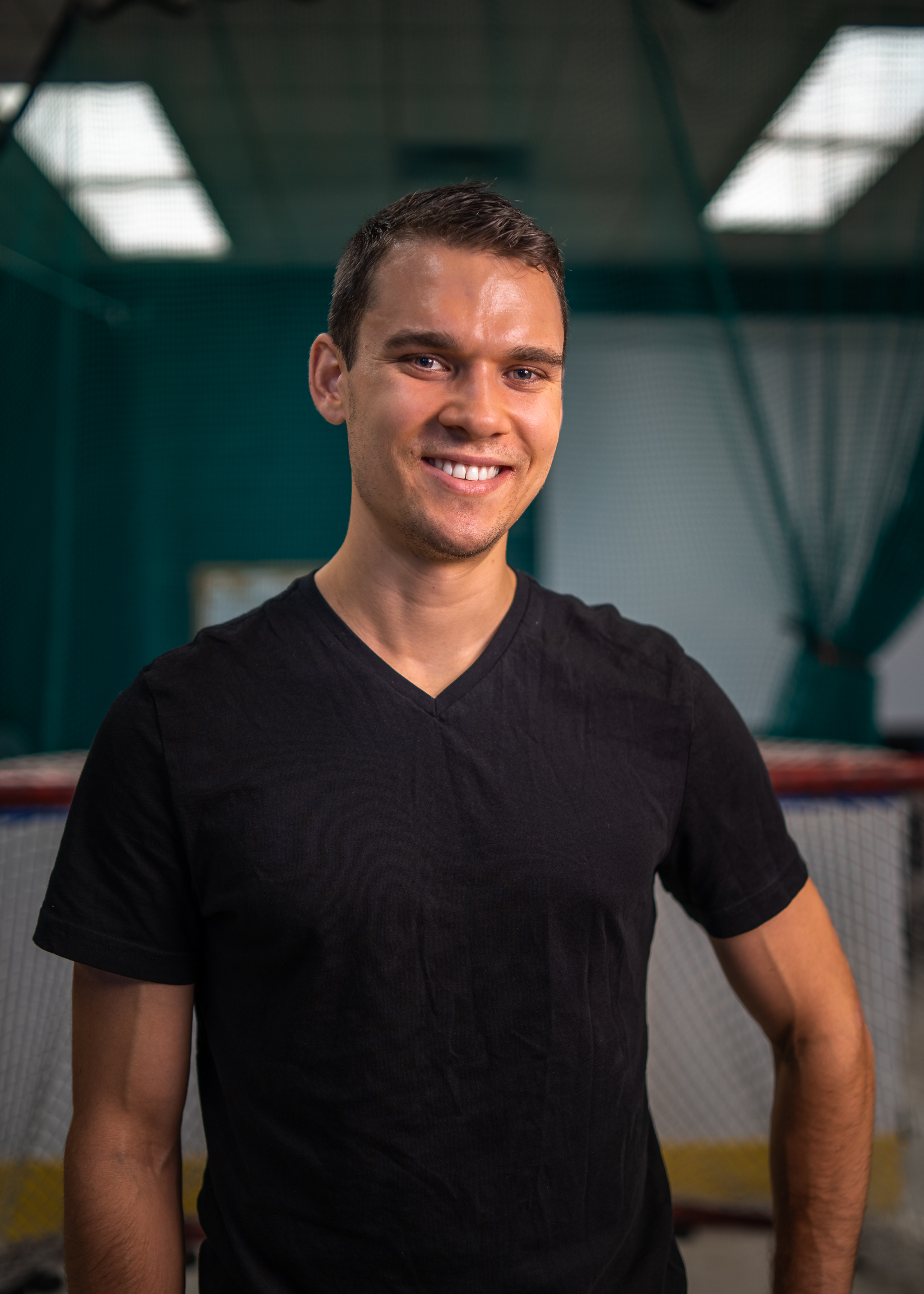
Software engineer

Building software that turns movement data into actionable insights.

I specialize in data pipelines, data analysis, and computer vision—designed for reliability, cost control, and real-world users.

Aaron Manning
Toronto, Canada

Scale

10,000 assessments / month

Efficiency

93%+ lower inference cost

Focus

Data, vision & reliable systems

Selected work

Technical ownership, end to end.

03 case studies

01

Computer vision

Video-assessment pipeline

Built the distributed system that turns training video into reliable movement feedback at production scale.

  • Coordinated video artifacts, cloud storage, Pub/Sub inference, external analysis services, and explicit state transitions.
  • Redesigned inference around idempotent output handling, bounded producer-consumer frame processing, and batched detection and pose estimation.
Outcome
10k+ assessments / month at 93% lower inference cost
Focus
Efficient video processing at scale

02

AI systems

AI planning & retrieval

Designed grounded AI workflows for training plans and semantic retrieval over a controlled exercise and assessment catalog.

  • Used agents, structured outputs, and tool calling to produce useful plans within explicit product boundaries.
  • Implemented relevance-ranked retrieval with embeddings, PostgreSQL/pgvector HNSW indexing, and Redis caching for low-latency results.
Outcome
Grounded, structured AI outputs
Focus
Low-latency semantic retrieval

03

Payments & entitlements

Multi-provider subscription access

Built a subscription system that keeps access accurate as Apple App Store and Stripe events arrive asynchronously.

  • Verified provider signatures, deduplicated billing events, and reconciled provider state through transactional workflows.
  • Mapped Apple and Stripe lifecycle changes into one application-owned entitlement model with guarded cross-provider updates.
Outcome
Reliable subscription access
Focus
Webhooks, reconciliation & integrity

AI-native workflow

Use AI for leverage.
Keep engineering judgment accountable.

I use AI to accelerate architecture exploration and feature implementation, while retaining ownership of consequential decisions, acceptance criteria, and release readiness.

  1. FrameExplore options, then make system-level decisions deliberately.
  2. BoundBreak complex work into small, reviewable increments.
  3. AccelerateUse AI heavily for implementation, tests, and documentation.
  4. OwnSet acceptance criteria and make the final release decision.

Capabilities

Depth where systems meet.

Back-end & data

TypeScript, Node.js, Python, PostgreSQL, Redis, API design, transactions, caching, idempotency

AI & computer vision

Agents, structured outputs, embeddings, semantic retrieval, pose estimation, video processing, biomechanics

Cloud & reliability

GCP, Cloud Run, Cloud SQL, Pub/Sub, Terraform, Docker, Kubernetes, CI/CD, observability

Security & integration

Authorization, Stripe, webhooks, auditability, least privilege, credential management

Background

Engineering informed by movement science.

At Curv AI, I have worked across AI-native back-end systems, distributed computer-vision pipelines, and cloud infrastructure since 2021. Before that, I built human-motion analysis pipelines and computer-vision assessments as a movement scientist.

I have also Built and validated a 3D aerodynamic model to predict the flight trajectory of hockey shots.

M.Sc., Biomechanics — McGill University · B.Sc., Engineering Physics — Queen’s University